Personal Loans in Massachusetts: What Licensed Lenders May Charge
Massachusetts sets two limits: a small loan rate for loans of $6,000 or less and a criminal usury law for the rest. Here is how they fit together, who needs a small loan license, and where to check a lender.
Cap 36% or less, by LendCedar Editorial Team Updated 6 minute read
In short
For a loan of $6,000 or less, a Massachusetts small loan company may charge up to 23% a year on the unpaid balance, figured by the actuarial method, plus a $20 administrative fee no more than once in 12 months (209 CMR 26.01). Anyone who makes such loans at more than 12% a year, interest and expenses combined, needs a small loan license from the Commissioner of Banks. Above $6,000, the criminal usury law sets a 20% ceiling for most lenders. The National Consumer Law Center puts the limit at about 24% APR on a $2,000 two-year loan and about 20% on a $10,000 five-year loan.
- $2,000 loan cap
- 24% APR
- $10,000 loan cap
- 20% APR
- Small loan rate
- 23% plus a $20 fee
- Licensed by
- Division of Banks
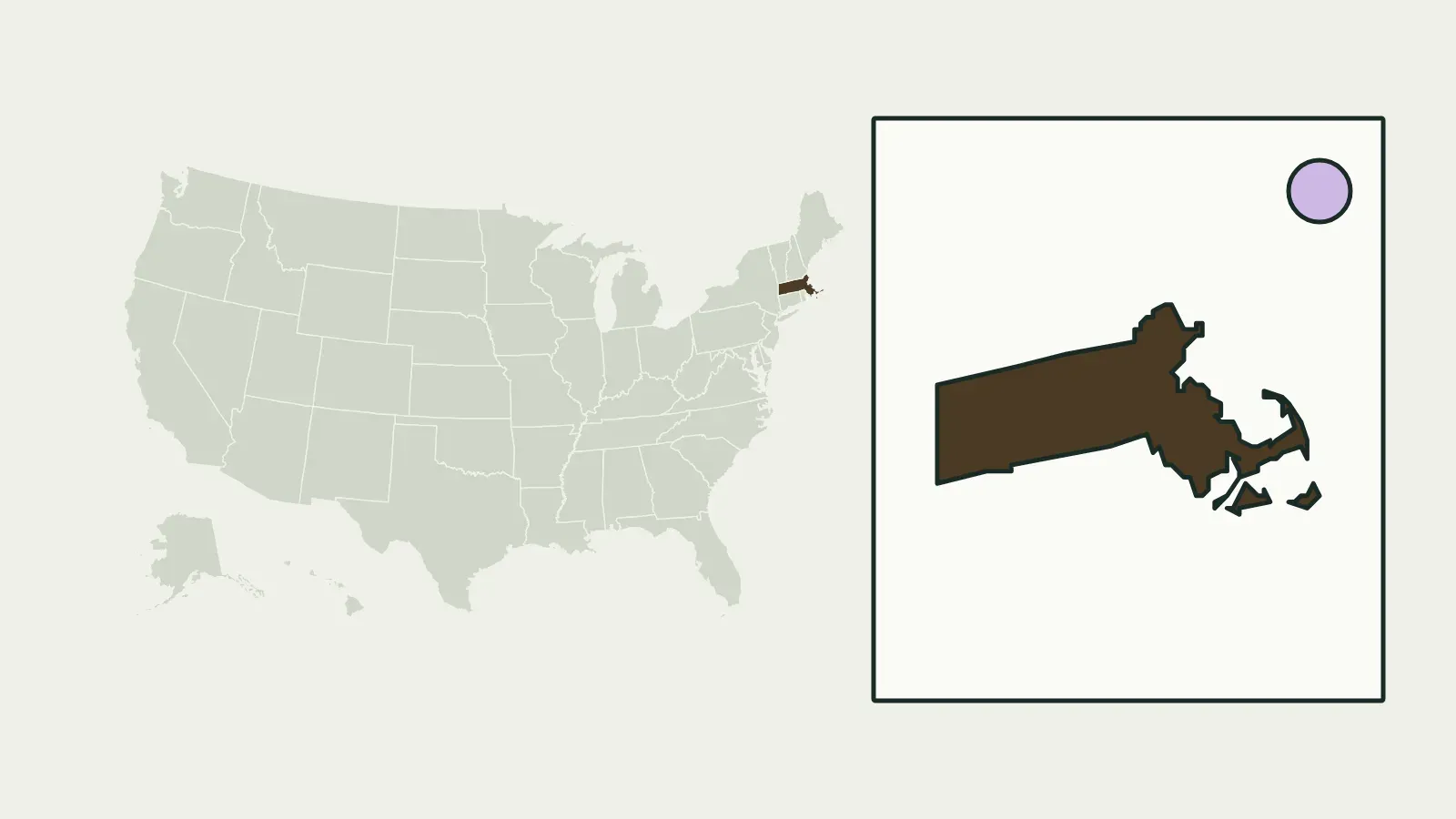
Massachusetts at a glance
How the Massachusetts limits work
| Loan | Limit | Where it is |
|---|---|---|
| $6,000 or less, interest and expenses above 12% | 23% a year plus a $20 administrative fee, small loan license required | G.L. c. 140, s. 96; 209 CMR 26.01 |
| Over $6,000 | 20% a year, all interest and expenses counted, with exceptions | G.L. c. 271, s. 49 |
The small loan rate is set by regulation under the small loan law. The $20 administrative fee may be charged when the loan is granted, and not more than once in any 12-month period. On a precomputed loan you pay off early, you are owed a refund or credit of the unearned interest.
The usury statute counts nearly every charge: interest, brokerage, recording fees, commissions, service and extension charges, and third-party charges the lender knew of or could have found out about. It does not apply to loans whose rate is regulated by another law, or to lenders that a state or federal agency regulates or examines. A person who notifies the Attorney General in advance, and keeps the required records, is also outside it.
How Massachusetts compares with its neighbors
On the National Consumer Law Center's comparison of a $2,000 two-year loan, Massachusetts and Rhode Island cap the loan at about 24% APR and New York at about 25%, while Connecticut and New Hampshire allow about 36%. For a $10,000 five-year loan, Massachusetts allows about 20%, against 21% in Rhode Island and 25% in New York and Connecticut. The state rules map shows every state side by side.
Who needs a license and who does not
Under G.L. chapter 140, section 96, no one may make loans of $6,000 or less for personal, family or household purposes, at interest and expenses above 12% a year, without a small loan license from the Commissioner of Banks. The 12% test counts all charges together, including fees, commissions and extension or forbearance charges, so a low stated rate with large fees can still require a license. The law reaches past storefront lenders in two ways.
- Lenders outside the state: when a Massachusetts resident applies and someone outside the Commonwealth advances or guarantees the money, the loan is treated as made in Massachusetts and the law applies.
- Arrangers: a person who arranges, aids or assists in making such loans for a fee is treated as being in the small loan business, even if someone else makes the loan.
- Banks and credit unions answer to separate charters and regulators, and a bank may charge the rates its home state allows. Ask any online lender who the lender of record is.
Payday and title loans are covered by our sister site Lendmira on its Massachusetts lending laws page. If a lender asks for a fee before it will approve or fund a loan, treat that as a warning sign; how to verify a lender explains what to check.
Check a lender and file a complaint
- Look up the license on NMLS Consumer Access or with the Division of Banks licensee lookup before you apply.
- Keep the loan papers: the Truth in Lending disclosure, the agreement and any messages about fees.
- File a complaint with the Division of Banks through the state's consumer complaints page, or call (800) 495-2265 toll-free or (617) 956-1500, weekdays 9 a.m. to 4 p.m.
- Send a complaint to the CFPB as well if the lender is a bank or a bank partner, or if you are unsure who regulates it.
Sources
- General Laws chapter 140, section 96, Small loans: license required (Massachusetts Legislature)
- General Laws chapter 271, section 49, Criminal usury (Massachusetts Legislature)
- 209 CMR 26.01, Small loans: maximum rate of charges (Code of Massachusetts Regulations, via Justia)
- Division of Banks (Mass.gov)
- State APR caps for $500, $2,000 and $10,000 installment loans, December 2025 (National Consumer Law Center)
We checked the facts on this page against these sources on October 27, 2026. The 23% rate and $20 fee are set by regulation, which the Division of Banks can amend, so check it before relying on an older figure.
Questions people ask
What is the maximum interest rate on a personal loan in Massachusetts?
For a licensed small loan of $6,000 or less, 23% a year plus a $20 administrative fee under 209 CMR 26.01. For larger loans, the criminal usury law sets 20% a year, counting interest and expenses, for lenders it covers.
Does the 20% usury limit apply to banks?
No. It does not apply to loans whose rate another law regulates, to lenders that a state or federal agency regulates or examines, or to a person who has notified the Attorney General and keeps the required records.
Does Massachusetts law reach online lenders based in another state?
Yes, for small loans. When a Massachusetts resident applies and the money comes from outside the state, chapter 140, section 96 treats the loan as made in Massachusetts.
How do I check a Massachusetts lender?
Search the company on NMLS Consumer Access or with the Division of Banks. See how to verify a lender for the other checks.
Ask lenders for real offers
Describe the loan you have in mind. LendCedar passes your request to lenders and loan brokers who may contact you with offers; you compare them and decide.
- The loan you have in mind: amount, purpose, credit and income.
- Your contact details and your consent to be contacted.
- A lender or loan broker may contact you with an offer. Nothing is decided until you sign with a lender.
LendCedar is not a lender or a loan broker and does not make credit decisions.
You pay LendCedar nothing. Lenders and loan brokers pay us for requests, and they set their own rates and terms. How we make money.
Nearby in the guide
-
Offer term
Net loan proceeds
What reaches your account when a fee is deducted, and how to gross up a loan to net the sum you need.
-
Step
Verify a lender
Find the license on NMLS or with your state, match the lender of record and spot advance-fee scams.
-
Offer term
Truth in Lending disclosures
The federal box line by line: APR, finance charge, amount financed, total of payments and what sits below.