Personal Loans in Washington, D.C.: What Licensed Lenders May Charge
The District caps written loan contracts at 24% a year, one of the lowest limits in the country, and the limit reaches lenders that solicit D.C. residents. Here is how it works, who needs a license, and where to check a lender.
Cap 36% or less, by LendCedar Editorial Team Updated 5 minute read
In short
D.C. Code § 28-3301 lets the parties to a written loan contract agree to interest of no more than 24% a year. The ceiling covers consumer credit deals with D.C. residents when the creditor solicited or advertised in the District. A company that lends money in D.C. at more than 6% a year needs a money lender license under § 26-901, and the District's banking regulator, the Department of Insurance, Securities and Banking (DISB), says such lenders must be licensed by it. The National Consumer Law Center puts the ceiling at about 24% APR on both a $2,000 and a $10,000 loan.
- $2,000 loan cap
- 24% APR
- $10,000 loan cap
- 24% APR
- Interest ceiling
- 24% a year
- Licensed by
- DISB
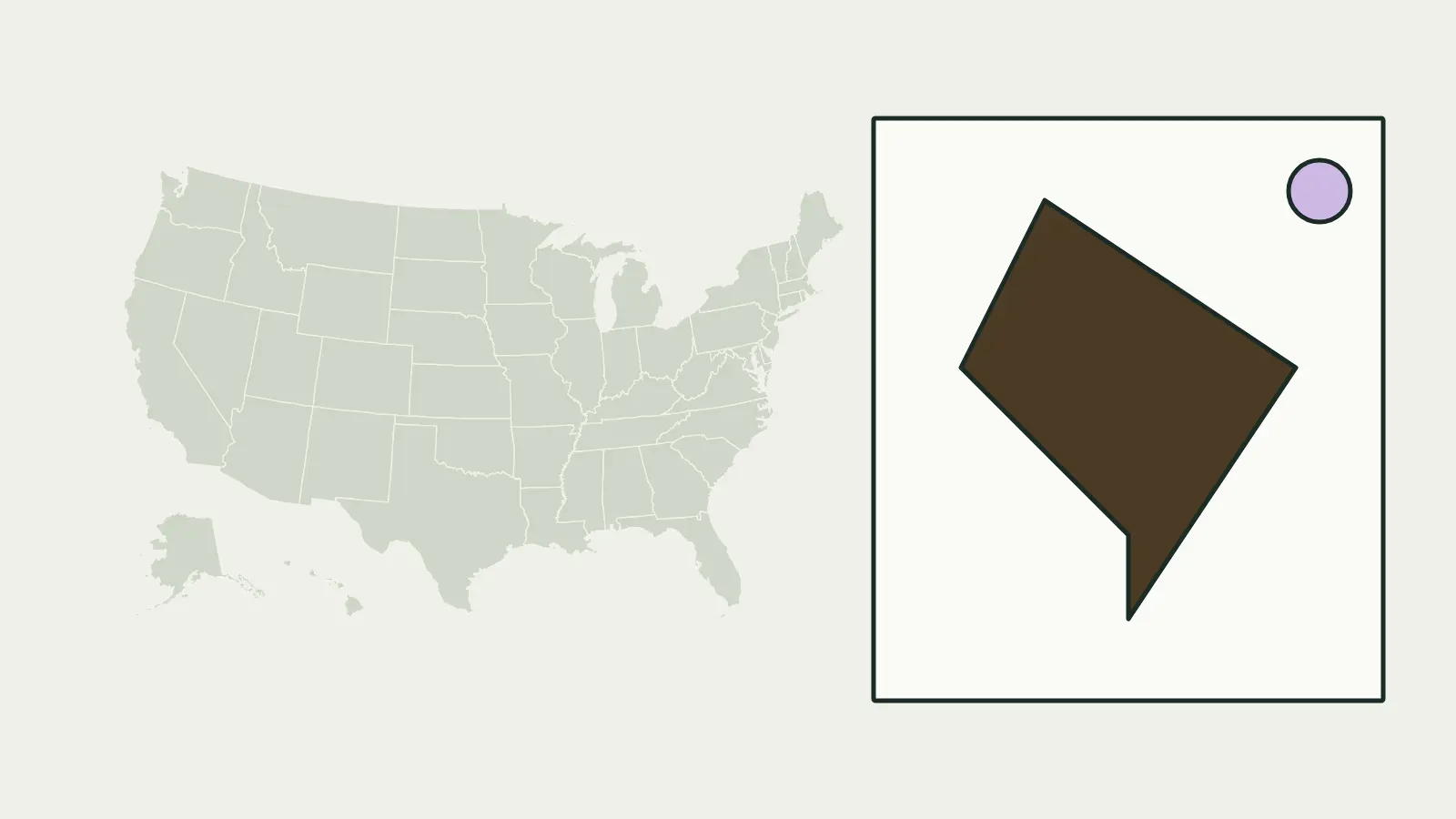
Washington, D.C. at a glance
How the 24% ceiling works
The District uses one flat ceiling rather than tiers by loan size. Section 28-3301(a) says parties to a written instrument for the future payment of money may contract for interest on the principal at a rate not exceeding 24% a year. The same 24% figure applies to loans secured by a home or a cooperative interest under subsections (b) and (c).
- Who it protects: subsection (h) applies the chapter to consumer credit in the District. A deal counts as made in D.C. if the creditor receives the signed agreement there, or if a D.C. resident enters it with a creditor that solicited or advertised in D.C.
- What it leaves out: loans above $2,500 to a business, investment, nonprofit or religious borrower may carry any agreed rate. A lender may not require you to sign a false statement that your loan fits one of those exemptions.
Compare the APR on your Truth in Lending disclosure with the ceiling, since the APR counts interest and most fees together.
How the District compares with its neighbors
On the NCLC comparison of a $2,000 two-year loan, Maryland allows about 30% APR and Virginia about 50%. If you live in the District and borrow from a lender based in Maryland or Virginia, D.C. law can still apply when the lender solicited or advertised to you in D.C. The state rules map shows every state side by side.
Who needs a license and who does not
D.C. Code § 26-901 requires anyone engaged in the District in lending money at a rate above 6% a year to hold a money lender license. The license is issued as a Financial Services endorsement to a basic business license, and a corporate lender must appoint a registered agent in the District. A DISB consumer guide on borrowing online says companies lending to D.C. residents must be licensed by DISB, and that only licensed lenders come under the 24% limit and DISB's protections.
- Banks and credit unions answer to their own charters and banking regulators, and a bank may charge the rates its home state allows.
- Online lenders that partner with a bank may make loans through that bank, which can put the loan outside the D.C. ceiling. Ask who the lender of record is before you sign.
- Payday and title loans are a separate subject. Our sister site Lendmira covers them on its Washington, D.C. lending laws page.
The DISB guide also warns that some online loans charge more than the 24% limit and some renew automatically every payday, so they can cost far more than the amount borrowed. If a lender asks for a fee before it will approve or fund the loan, treat it as a warning sign; how to verify a lender explains what to check.
Check a lender and file a complaint
- Verify the license by calling DISB at (202) 727-8000 or by searching NMLS Consumer Access, before you apply.
- Check the APR on the disclosure. A nonbank offer above 24% to a D.C. resident is a reason to ask the lender which law it lends under.
- Keep the loan papers: the Truth in Lending disclosure, the agreement and any messages about fees.
- Complain to DISB through its complaints page, by email to [email protected], by phone at (202) 727-8000 or by mail to 1050 First St. NE, Suite 801, Washington, DC 20002.
- Send a complaint to the CFPB as well if the lender is a bank or a bank partner, or if you are unsure who regulates it.
Sources
- D.C. Code § 28-3301 — Rate of interest; usury (Council of the District of Columbia)
- D.C. Code § 26-901 — Money lenders: license required (Council of the District of Columbia)
- Things to know before borrowing money online, consumer guide (DISB)
- Department of Insurance, Securities and Banking — file a complaint
- State APR caps for $500, $2,000 and $10,000 installment loans, December 2025 (National Consumer Law Center)
We checked the facts on this page against these sources on October 27, 2026. The DISB consumer guide is undated; the statute text comes from the Council's online D.C. Code.
Questions people ask
What is the maximum interest rate on a personal loan in Washington, D.C.?
Under D.C. Code § 28-3301, a written loan contract may carry interest of up to 24% a year. Some business, investment, nonprofit and religious loans above $2,500 are exempt.
Does the 24% ceiling apply to online lenders outside D.C.?
It can. The chapter treats a consumer credit deal as made in the District if a D.C. resident enters it with a creditor that solicited or advertised in D.C. Banks and their partners may be able to charge their home state's rates.
Who licenses lenders in the District?
A lender charging more than 6% a year in D.C. needs a money lender license under § 26-901, issued as a Financial Services endorsement to a basic business license. DISB supervises these lenders and takes complaints.
How do I know if a D.C. lender is licensed?
Call DISB at (202) 727-8000 or search NMLS Consumer Access. If the company is not licensed and is not a bank, ask under what authority it lends to D.C. residents. See how to verify a lender.
Ask lenders for real offers
Describe the loan you have in mind. LendCedar passes your request to lenders and loan brokers who may contact you with offers; you compare them and decide.
- The loan you have in mind: amount, purpose, credit and income.
- Your contact details and your consent to be contacted.
- A lender or loan broker may contact you with an offer. Nothing is decided until you sign with a lender.
LendCedar is not a lender or a loan broker and does not make credit decisions.
You pay LendCedar nothing. Lenders and loan brokers pay us for requests, and they set their own rates and terms. How we make money.
Nearby in the guide
-
Offer term
Truth in Lending disclosures
The federal box line by line: APR, finance charge, amount financed, total of payments and what sits below.
-
Step
Verify a lender
Find the license on NMLS or with your state, match the lender of record and spot advance-fee scams.
-
Step
Where to borrow
Banks, credit unions, online lenders, CDFIs and finance companies: who regulates each and what they may charge.