Personal Loans in South Carolina: What Licensed Lenders May Charge
South Carolina does not cap the rate on most personal loans with a number. A licensed lender sets its own maximum rates, files them with the state and posts them. Here is how that system works, who needs a license and where to check a lender.
No numeric cap, by LendCedar Editorial Team Updated 6 minute read
In short
In South Carolina, a consumer loan priced above 12% a year is a supervised loan, and a lender that is not a bank or other supervised financial organization needs a license from the State Board of Financial Institutions (Consumer Finance Division). On cash advances of up to $600, charges are capped by a statutory schedule. Above $600, the lender may charge any rate it files and posts under section 37-3-305 of the Consumer Protection Code. There is no numeric ceiling; the check is the code's unconscionability standard.
- $2,000 loan cap
- No numeric cap
- $10,000 loan cap
- No numeric cap
- Above $600
- Filed and posted rate
- Licensed by
- Consumer Finance Division
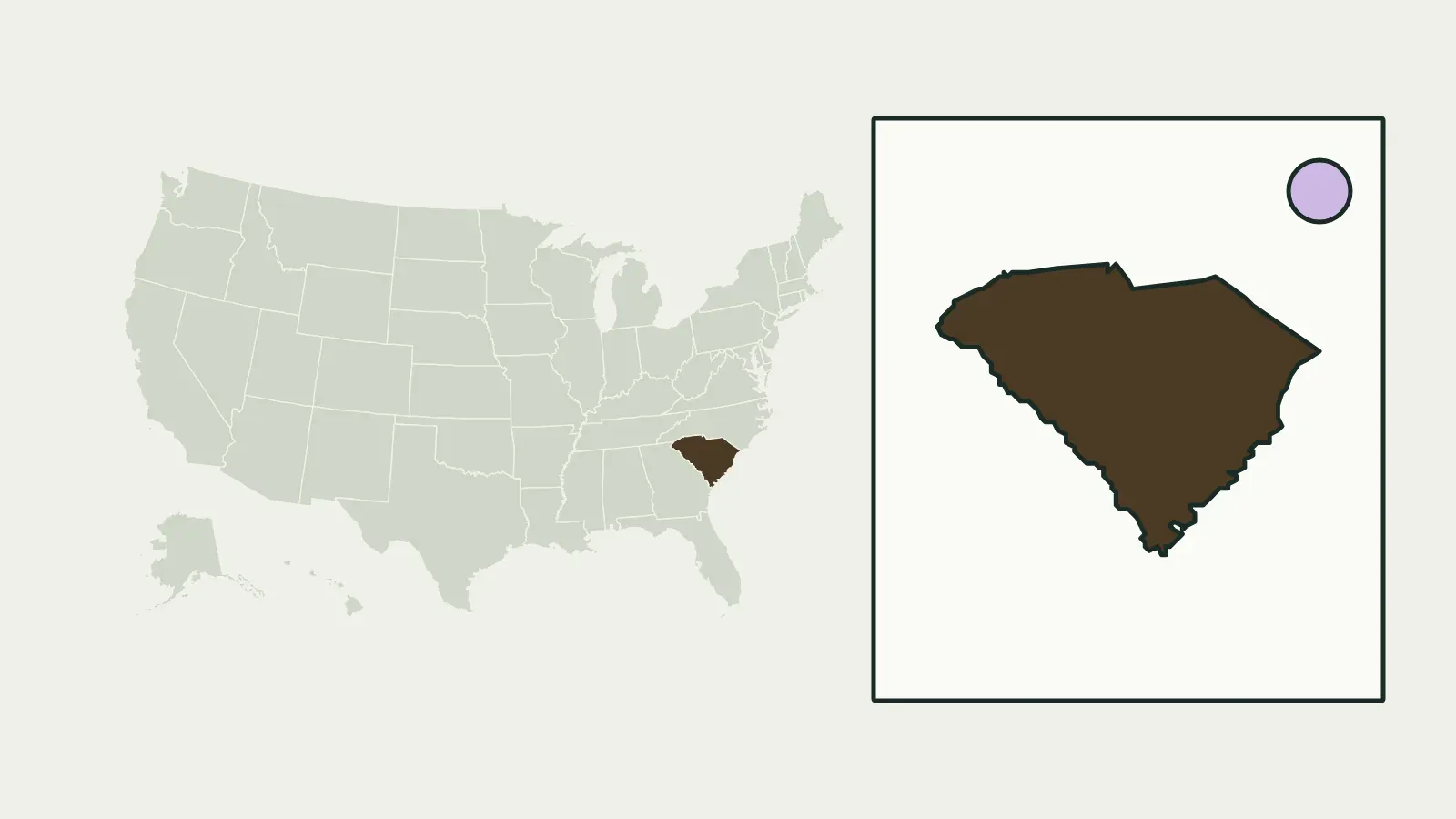
South Carolina at a glance
How the filed-rate system works
Section 37-3-201 of the South Carolina Consumer Protection Code (Title 37) gives a supervised lender three ways to price a loan. Which one applies depends on the size of the cash advance.
| Loan | Limit |
|---|---|
| Cash advance of $600 or less | The maximum charges in section 34-29-140, stated as an APR |
| Cash advance over $600 | Any rate filed and posted under section 37-3-305 |
| Loan of any amount | 18% a year on the unpaid principal |
Under section 37-3-305, a lender that makes supervised or restricted consumer loans must file a maximum rate schedule with the South Carolina Department of Consumer Affairs, stated as APRs for each kind of loan: unsecured personal loans, secured personal loans, real estate loans, open-end credit and all others. The lender must post the schedule in a conspicuous place in each office in the state. If it does not file by January 31, its charges may not exceed 18% a year until it does.
The unconscionability standard
Section 37-5-108 lets a court refuse to enforce a loan agreement, or strike an unconscionable term, and award actual damages. Among the factors the court weighs: whether the lender knew or should have known that you could not make the payments, given your income, other debts and job; whether it took advantage of your inability to protect your interests; and whether a charge substantially exceeds the usual and customary charge for that kind of loan.
This is a protection you raise after the fact, usually with a lawyer, not a limit a lender must stay under before it lends. A high filed rate is legal on its face, so the APR on the disclosure is still the number to judge before you sign.
Who needs a license and who does not
Under section 37-3-502, only a supervised financial organization or a business licensed by the State Board of Financial Institutions may make supervised loans. The Consumer Finance Division licenses companies, other than depository institutions and insurance companies, that make consumer loans above 12% APR not secured by real estate. Applications go through NMLS, and a website used to make supervised loans needs a separate license.
- Banks and credit unions are supervised financial organizations and do not need this license; a bank may charge the rates its home state allows.
- Online lenders that partner with a bank may make loans through that bank. Ask who the lender of record is.
- Payday and auto title loans follow their own rules. Our sister site Lendmira covers them on its South Carolina lending laws page.
Late charges and paying early
The lender may charge a delinquency fee only on an installment not paid in full within 10 days after its due date, and section 37-3-203 limits its size. You may prepay a consumer loan in full at any time without penalty. On a precomputed loan, the lender must rebate at least the unearned part of the finance charge, though it may keep a minimum charge of up to $15 if the contract provides for one.
On the National Consumer Law Center's comparison of a $2,000 two-year loan, neighbors take a different approach: North Carolina caps that loan at about 35% APR and Georgia at about 32%. The state rules map shows every state side by side.
Check a lender and file a complaint
- Look up the license on NMLS Consumer Access, or ask the Consumer Finance Division at (803) 734-2020, before you apply.
- Ask for the posted rate schedule and keep the Truth in Lending disclosure, the agreement and any messages about fees.
- Complain to the Consumer Finance Division about a licensed lender, or to the Department of Consumer Affairs through its online complaint form or at (800) 922-1594.
- Send a complaint to the CFPB as well if the lender is a bank or a bank partner. How to verify a lender lists what to check.
Sources
- South Carolina Code Title 37, Chapter 3 — Consumer loans (South Carolina Legislature)
- South Carolina Code Title 37, Chapter 5 — Remedies and penalties, section 37-5-108
- Consumer lending (supervised lenders), Consumer Finance Division, State Board of Financial Institutions
- Consumer complaints (South Carolina Department of Consumer Affairs)
- State APR caps for $500, $2,000 and $10,000 installment loans, December 2025 (National Consumer Law Center)
We checked the facts on this page against these sources on October 27, 2026. Lenders file new rate schedules each year, so the rate a given lender may charge can change.
Questions people ask
Is there a maximum interest rate on personal loans in South Carolina?
Not a single number for most personal loans. On cash advances over $600, a supervised lender may charge any rate it files with the Department of Consumer Affairs and posts in its offices. Smaller advances of $600 or less follow a statutory schedule.
What is a maximum rate schedule?
It is the list of maximum APRs, by type of loan, that a supervised or restricted lender files with the Department of Consumer Affairs under section 37-3-305 and must post in each office. A lender that has not filed by January 31 is held to 18% a year until it does.
Can a South Carolina loan be challenged as too expensive?
Yes, in court. Section 37-5-108 lets a judge refuse to enforce an unconscionable agreement or term, for example when the lender knew you could not repay or charged far more than is usual for that kind of loan.
How do I know if a South Carolina lender is licensed?
Search NMLS Consumer Access or call the Consumer Finance Division of the State Board of Financial Institutions. See how to verify a lender.
Ask lenders for real offers
Describe the loan you have in mind. LendCedar passes your request to lenders and loan brokers who may contact you with offers; you compare them and decide.
- The loan you have in mind: amount, purpose, credit and income.
- Your contact details and your consent to be contacted.
- A lender or loan broker may contact you with an offer. Nothing is decided until you sign with a lender.
LendCedar is not a lender or a loan broker and does not make credit decisions.
You pay LendCedar nothing. Lenders and loan brokers pay us for requests, and they set their own rates and terms. How we make money.
Nearby in the guide
-
Offer term
Total cost of a loan
Finance charge, APR and total of payments, with three worked offers for the same $10,000 loan.
-
Step
Verify a lender
Find the license on NMLS or with your state, match the lender of record and spot advance-fee scams.
-
Offer term
Truth in Lending disclosures
The federal box line by line: APR, finance charge, amount financed, total of payments and what sits below.