Personal Loans in Oregon: What Licensed Lenders May Charge
Oregon caps consumer finance loans of $50,000 or less at 36% APR in 2026, and a 2026 law aims that cap at loans that out-of-state banks make here. Here is how the limit works, who needs a license and where to check a lender.
Cap 36% or less, by LendCedar Editorial Team Updated 6 minute read
In short
A business that makes consumer finance loans of $50,000 or less to Oregonians needs a consumer finance license under ORS chapter 725 from the Division of Financial Regulation (DFR). The finance charge, stated as an APR under the federal Truth in Lending rules, may not exceed the greater of 36% or 30 percentage points above the Federal Reserve's discount rate; for loans made in 2026 the limit is 36% APR. A 2026 law, House Bill 4116, opts Oregon out of the federal rule that lets out-of-state banks charge their home-state rates on these loans.
- $2,000 loan cap
- 36% APR
- $10,000 loan cap
- 36% APR
- Loans covered
- $50,000 or less
- Licensed by
- Oregon DFR
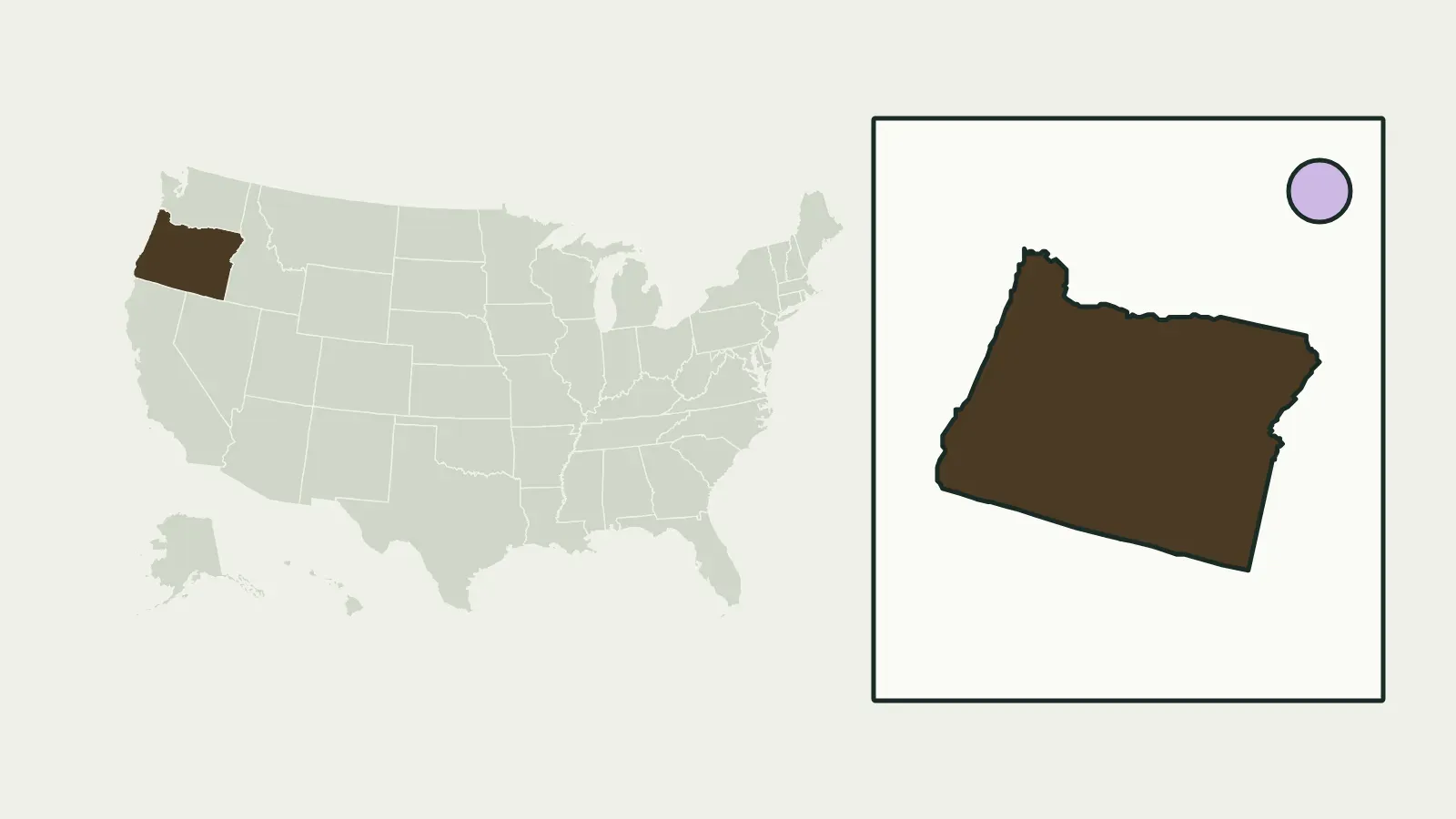
Oregon at a glance
How the Oregon rate limit works
ORS 725.340 sets one ceiling for the whole loan, measured as an annual percentage rate. That matters: because the cap is an APR as defined by the federal Truth in Lending Act, finance charges such as origination fees count toward it. A lender cannot add a large upfront fee on top of a 36% rate.
| Step | Figure for 2026 |
|---|---|
| Discount window primary credit rate, set by DFR order on December 12, 2025 | 3.75% |
| 30 percentage points above that rate | 33.75% |
| Floor in the statute | 36% |
| Maximum APR (the greater of the two) | 36% |
Each December the director of the Department of Consumer and Business Services sets the discount rate for the next calendar year, and the cap in force when your loan is made applies for its whole term. The 30-point formula would only lift the cap above 36% if the Federal Reserve's discount rate rose above 6%.
Who needs a license and the 2026 bank-rate law
Under ORS 725.045 you may not make, broker or facilitate a consumer finance loan of $50,000 or less without a DFR license. A consumer finance loan is one with periodic payments and a term longer than 60 days. If an unlicensed business makes such a loan, the statute makes it void: the lender may not collect principal, interest or fees on it.
- Banks and credit unions lend under their own charters and federal law, not a chapter 725 license.
- Out-of-state banks and their partners: House Bill 4116 (Oregon Laws 2026, chapter 113) declares that Oregon does not want section 521 of the federal Depository Institutions Deregulation and Monetary Control Act to apply to consumer finance loans made in the state. It covers loans made from its effective date, the 91st day after the 2026 session adjourned. The law does not define where a loan is made, so ask any online lender who the lender of record is and which rate limit it follows.
- Payday and title loans are licensed separately under chapter 725A. Our sister site Lendmira covers them on its Oregon lending laws page.
Late charges, prepayment and other rights
You may prepay any Oregon consumer finance loan, in any amount, at any time. On a precomputed loan repaid early, the lender must rebate unearned interest by the formula in ORS 725.340. On a precomputed loan of up to 62 months, a default charge is allowed only when a payment is more than 10 days late and is capped at the lesser of 5% of the installment or $5, once per installment.
Other fees, such as late fees on simple-interest loans, must be reasonable and bona fide and are subject to DFR oversight. A licensee may not take an assignment of your wages as payment or security, and when you pay the loan in full it must release any lien. Late fees and returned payments explains what to look for in the agreement.
How Oregon compares with its neighbors
On the National Consumer Law Center's comparison of a $2,000 two-year loan, California caps that loan at about 25% APR and Washington at about 29%, below Oregon's 36%. Nevada allows about 40%, and Idaho sets no numeric cap. Your state of residence and the lender's license decide which rules apply. The state rules map shows every state side by side.
Check a lender and file a complaint
- Look up the license with DFR's license check at dfr.oregon.gov before you apply; consumer finance, payday and title lenders each hold their own license.
- Keep the loan papers: the Truth in Lending disclosure, the agreement and any messages about fees.
- Complain to DFR online or through its consumer hotline at (888) 877-4894 if a lender charges more than the law allows or lends without a license.
- Send a complaint to the CFPB as well if the lender is a bank or a bank partner. How to verify a lender lists what to check.
Sources
- Oregon Revised Statutes chapter 725 — Consumer finance (2025 edition, Oregon Legislature)
- House Bill 4116 (2026), Oregon Laws 2026 chapter 113 — Enrolled text (Oregon Legislature)
- Discount rate order for consumer finance loans made in 2026, December 12, 2025 (Oregon DFR)
- Division of Financial Regulation — file a complaint and check a license
- State APR caps for $500, $2,000 and $10,000 installment loans, December 2025 (National Consumer Law Center)
We checked the facts on this page against these sources on October 27, 2026. DFR sets the discount rate for 2027 each December; we will update the table when the new order is published.
Questions people ask
What is the maximum interest rate on a personal loan in Oregon?
For a licensed consumer finance lender, it is the greater of 36% APR or 30 percentage points above the Federal Reserve's discount rate. For loans made in 2026 that works out to 36% APR, fees counted as finance charges included.
Does the Oregon cap apply to loans over $50,000?
No. The chapter 725 license and its rate limit cover consumer finance loans of $50,000 or less.
Can an online lender charge more than 36% in Oregon?
A licensed lender cannot. Lenders that work through an out-of-state bank have relied on federal law to charge the bank's home-state rate; a 2026 Oregon law opts out of that rule for consumer finance loans made in the state. Ask who the lender of record is before you sign.
How do I know if an Oregon lender is licensed?
Use the license check of the Division of Financial Regulation. If the company is not listed and is not a bank or credit union, do not apply. See how to verify a lender.
Ask lenders for real offers
Describe the loan you have in mind. LendCedar passes your request to lenders and loan brokers who may contact you with offers; you compare them and decide.
- The loan you have in mind: amount, purpose, credit and income.
- Your contact details and your consent to be contacted.
- A lender or loan broker may contact you with an offer. Nothing is decided until you sign with a lender.
LendCedar is not a lender or a loan broker and does not make credit decisions.
You pay LendCedar nothing. Lenders and loan brokers pay us for requests, and they set their own rates and terms. How we make money.
Nearby in the guide
-
Offer term
Total cost of a loan
Finance charge, APR and total of payments, with three worked offers for the same $10,000 loan.
-
Step
Verify a lender
Find the license on NMLS or with your state, match the lender of record and spot advance-fee scams.
-
Offer term
Late fees and returned payments
Where the late charge appears, why the APR leaves it out, state limits in Ohio and Florida, and federal rules.