Personal Loans in Illinois: The 36% All-In Cap
Since March 2021, the Predatory Loan Prevention Act has capped nearly every consumer loan in Illinois at 36%, fees included, and reaches lenders that try to work around it through a partner. Here is how the cap works, who it covers and where to check a lender.
Cap 36% or less, by LendCedar Editorial Team Updated 6 minute read
In short
The Predatory Loan Prevention Act (815 ILCS 123), in force since March 23, 2021, bars any lender from charging more than a 36% annual percentage rate on a consumer loan in Illinois. The rate is counted with the military APR method of the federal Military Lending Act, so fees count toward it. A loan that breaks the cap is null and void: the lender may not collect principal, interest or fees. The Act's anti-evasion section treats a company as the lender when it holds the predominant economic interest in a loan, even if a bank's name is on the papers. Banks, credit unions and insurers are exempt.
- $2,000 loan cap
- 36% APR
- $10,000 loan cap
- 36% APR
- Cap measured as
- Military APR, all-in
- Licensed by
- IDFPR
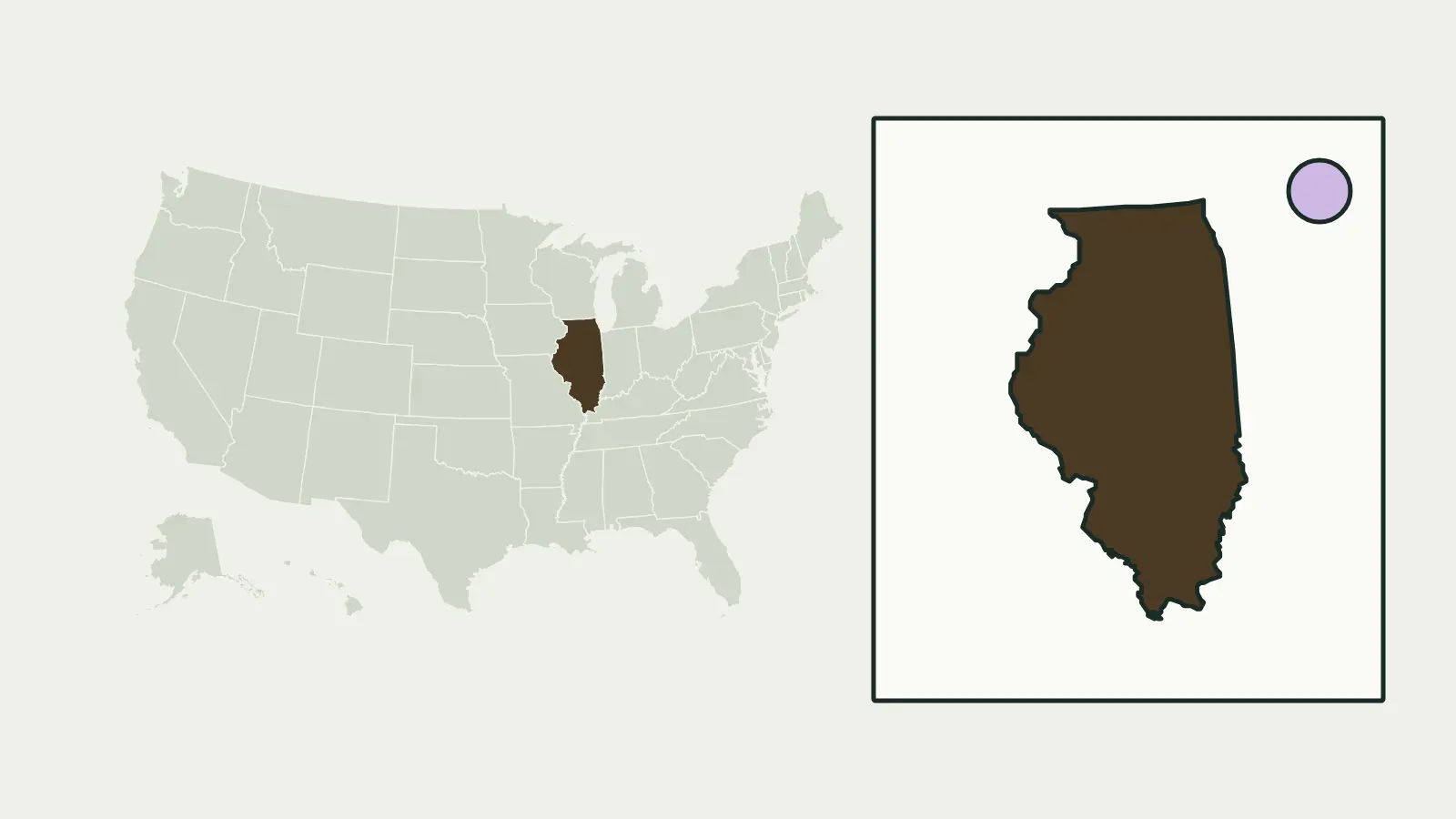
Illinois at a glance
How the 36% cap works
Section 15-5-5 says a lender may not contract for or receive charges exceeding a 36% annual percentage rate on a loan made or renewed on or after the Act took effect. The rate is calculated with the system for a military annual percentage rate in 32 CFR 232.4, the rule under the federal Military Lending Act, rather than with the Truth in Lending APR alone.
- One flat cap. There are no tiers: the same 36% applies to a $500 loan and a $10,000 loan, and to closed-end and open-end credit.
- Fees included. Origination fees and most other charges count toward the 36%, so a fee cannot be stacked on top of a 36% interest rate. Under 32 CFR 232.4, the military APR also counts credit insurance premiums and fees for credit-related add-on products sold with the loan; see credit insurance and add-ons.
- Strong remedy. Under Section 15-5-10, a loan made in violation of the Act is null and void, and no one may collect or keep principal, fees, interest or other charges on it.
The anti-evasion and true lender rule
Section 15-1-15 applies the Act to any person or entity that offers or makes a loan to a consumer in Illinois, and to anyone who tries to evade it by any device, subterfuge or pretense. Section 15-5-15 then spells out when a company that is not named as the lender is treated as the lender anyway.
Predominant economic interest
A company that holds, directly or indirectly, the predominant economic interest in the loan is a lender under the Act.
Marketing plus a right to buy
A company that markets, brokers, arranges or facilitates the loan and holds a right of first refusal to buy the loans or interests in them is a lender.
Totality of the circumstances
The IDFPR Secretary may find a company is the lender when the overall circumstances show it, for example when it indemnifies an exempt bank.
This is what makes the Illinois cap reach many online loans made through a bank partner. The bank itself is exempt, but a non-bank partner that holds the predominant economic interest in the loans is not. Ask any online lender who funds and keeps the loan before you apply.
How Illinois compares with its neighbors
| State | $2,000 two-year loan |
|---|---|
| Illinois | 36% APR |
| Iowa | About 36% APR |
| Indiana | About 40% APR |
| Kentucky | About 42% APR |
| Missouri and Wisconsin | No numeric cap |
The state rules map shows every state. If you live near a state line, your state of residence and the lender's license decide which rules apply.
Who is covered and who is exempt
The Act defines a lender as any person or entity that offers or makes a loan, including its affiliates and subsidiaries, and a loan as closed-end or open-end consumer credit, including retail installment sales contracts. Only commercial loans are left out.
- Exempt: banks, savings banks, savings and loan associations, credit unions and insurance companies chartered or certified under Illinois, another state's or federal law.
- Covered: finance companies licensed under the Consumer Installment Loan Act and other Illinois licensing laws. A violation also exposes them to discipline under their own licensing Act.
- Payday and title loans are consumer loans under the Act too, so the same 36% cap applies. Our sister site Lendmira covers them on its Illinois page.
Check a lender and file a complaint
- Look up the license in the IDFPR Division of Financial Institutions license lookup before you apply.
- Work out the all-in rate. If the APR on the disclosure is above 36%, or close to it before add-ons, ask the lender to explain. How to verify a lender lists other warning signs.
- File a complaint with the Division of Financial Institutions through its complaint page, or call IDFPR at 1 (888) 473-4858 (TTY 1 (866) 325-4949).
- Send a complaint to the CFPB as well if the lender is a bank or a bank partner.
Sources
- Predatory Loan Prevention Act, 815 ILCS 123 (Illinois General Assembly)
- Illinois Department of Financial and Professional Regulation — Division of Financial Institutions
- Military Lending Act rule, 32 CFR 232.4 (eCFR)
- State APR caps for $500, $2,000 and $10,000 installment loans, December 2025 (National Consumer Law Center)
We checked the facts on this page against these sources on October 27, 2026. The cap and the anti-evasion section come from Public Act 101-658, effective March 23, 2021, with no later amendments listed.
Questions people ask
What is the maximum interest rate on a personal loan in Illinois?
36% a year, counted with the military APR method, under the Predatory Loan Prevention Act. Fees count toward the cap. Banks, credit unions and insurance companies are exempt.
What happens if an Illinois lender charges more than 36%?
The loan is null and void under Section 15-5-10. No one may collect or keep principal, interest, fees or other charges on it.
Can an online lender avoid the cap by partnering with a bank?
Not if it is the real lender. Section 15-5-15 treats a company as the lender if it holds the predominant economic interest in the loan, or markets the loan and has a right to buy it, among other tests.
Who regulates lenders in Illinois?
The Illinois Department of Financial and Professional Regulation, through its Division of Financial Institutions. See how to verify a lender for the checks to run first.
Ask lenders for real offers
Describe the loan you have in mind. LendCedar passes your request to lenders and loan brokers who may contact you with offers; you compare them and decide.
- The loan you have in mind: amount, purpose, credit and income.
- Your contact details and your consent to be contacted.
- A lender or loan broker may contact you with an offer. Nothing is decided until you sign with a lender.
LendCedar is not a lender or a loan broker and does not make credit decisions.
You pay LendCedar nothing. Lenders and loan brokers pay us for requests, and they set their own rates and terms. How we make money.
Nearby in the guide
-
Offer term
Truth in Lending disclosures
The federal box line by line: APR, finance charge, amount financed, total of payments and what sits below.
-
Step
Verify a lender
Find the license on NMLS or with your state, match the lender of record and spot advance-fee scams.
-
Offer term
Credit insurance and add-ons
Credit life, disability and job-loss coverage: when it is optional, what it adds, how to cancel it.