Personal Loans in Arkansas: The 17% Limit and Who It Binds
Arkansas writes its rate limit into the state constitution: 17% a year on loans and contracts. Here is how that limit works, why a bank can charge more, and where to turn if a lender charges above it.
Cap 36% or less, by LendCedar Editorial Team Updated 5 minute read
In short
Amendment 89 to the Arkansas Constitution says the maximum lawful rate of interest on loans or contracts shall not exceed 17% a year, and Arkansas Code 4-57-104 ties contract rates to that limit. The National Consumer Law Center, which compares state caps, counts it as the lowest cap in the country for a $2,000 or $10,000 loan from a non-bank lender. Federally insured banks and credit unions are treated differently: their limit follows federal law, so a bank loan in Arkansas can cost more than 17%.
- $2,000 loan cap
- 17% APR
- $10,000 loan cap
- 17% APR
- Source of the cap
- State constitution
- Complaints
- Attorney General
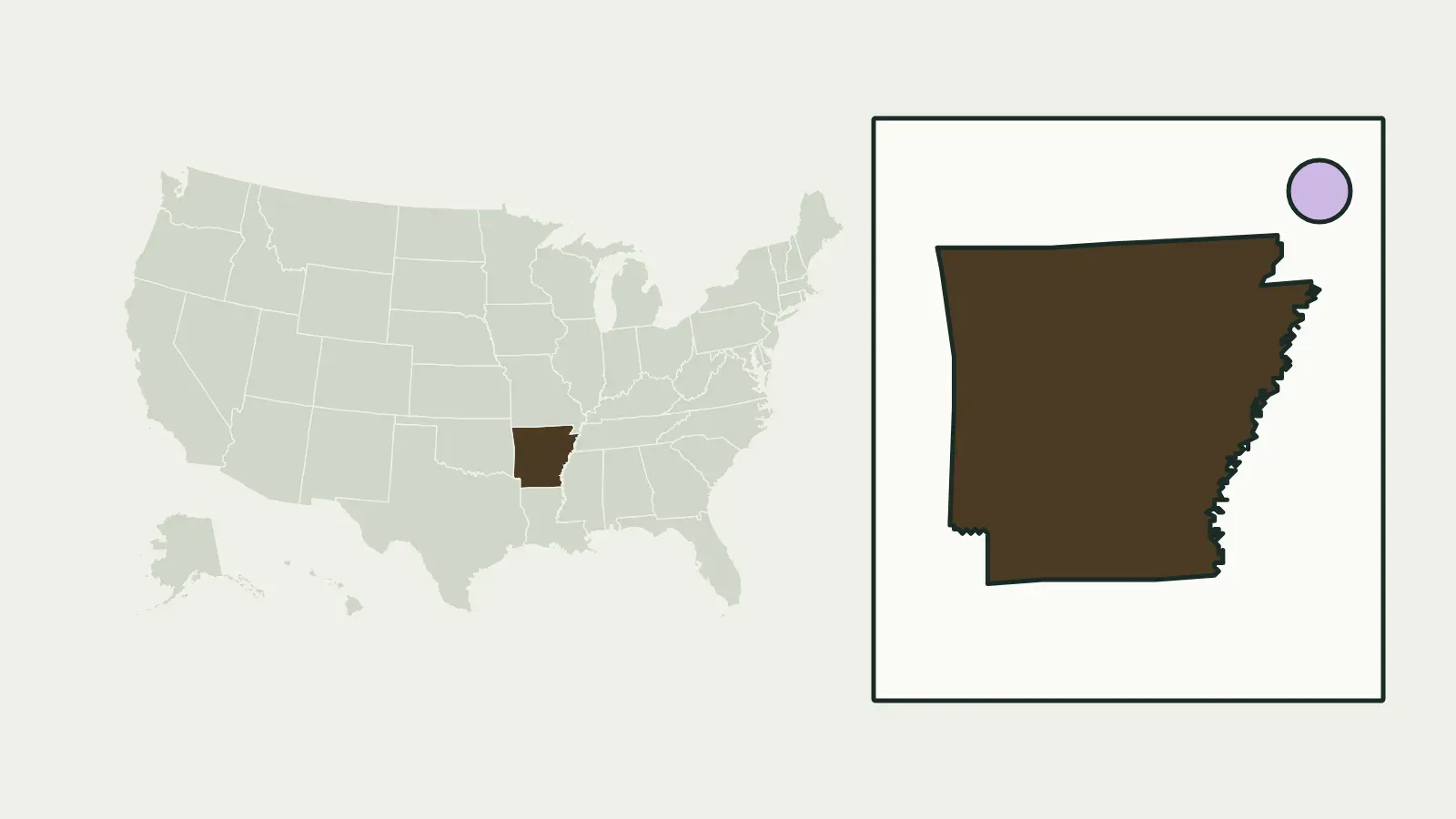
Arkansas at a glance
How the Arkansas rate limit works
The limit is a flat yearly rate, with no tiers by loan size. Voters approved it as Issue No. 2 in November 2010, and it took effect on January 1, 2011, as Amendment 89. Section 3 sets the 17% ceiling on loans or contracts. Arkansas Code 4-57-104 lets the parties agree in writing to any rate up to the limit in Amendment 89, and Section 4-57-105 bars anyone from taking more, directly or indirectly.
| Loan | Monthly payment at 17% | Total interest |
|---|---|---|
| $2,000 over 24 months | $98.88 | $373.12 |
| $10,000 over 60 months | $248.53 | $4,911.80 |
The National Consumer Law Center, which compares state caps, puts the Arkansas ceiling at 17% APR with fees included for a $500, a $2,000 and a $10,000 loan. If an offer from a non-bank lender shows an APR above 17% on its Truth in Lending disclosure, ask the lender to explain under what authority it charges that rate.
Banks, credit unions and online lenders
The 2010 ballot measure set the limit for federally insured depository institutions at the rate that results from federal preemption. In practice, a bank or credit union may charge the rate federal law allows it, which for a bank is the rate its home state permits.
- Banks and credit unions are supervised by banking regulators and may charge more than 17% on a personal loan.
- Online lenders that partner with a bank may make loans through that bank, which can put an Arkansas loan above 17%. Ask who the lender of record is.
- Non-bank lenders lending in their own name are held to the 17% limit. We could not find a separate state license for non-bank personal installment lenders; ask any lender which law it lends under.
- Payday and title loans are covered by our sister site Lendmira on its Arkansas lending laws page.
What to compare on an Arkansas offer
Because banks and non-bank lenders play by different rules here, the same loan can carry very different prices. Put every offer on the same footing before you choose.
- The APR and the total of payments from each Truth in Lending disclosure, not the monthly payment alone. The offer comparison calculator sets two offers side by side.
- Any fee taken from the loan. A fee deducted up front means less reaches your account and raises the APR.
- A credit union loan. Credit unions also lend under federal rules rather than the 17% limit. Ask a credit union you can join for its personal loan rate and compare it with the other offers.
- The term. A longer term lowers the payment but raises the total interest, even at the same rate.
How Arkansas compares with its neighbors
On the National Consumer Law Center's comparison of a $2,000 two-year loan from a licensed non-bank lender, Arkansas's 17% is far below its neighbors: Texas allows about 37% APR, Louisiana about 38%, Tennessee about 49%, Oklahoma about 56% and Mississippi about 59%, and Missouri has no cap. If you live near a state line, your state of residence and the lender's license decide which rules apply. The state rules map shows every state side by side.
Check a lender and file a complaint
- Ask who the lender of record is and whether it is a bank. For a non-bank lender, compare the APR with the 17% limit.
- Check the lender's registration in NMLS Consumer Access, where many non-bank lenders list their state licenses; how to verify a lender shows what to look for.
- Keep the loan papers: the Truth in Lending disclosure, the agreement and any messages about fees.
- File a complaint with the Arkansas Attorney General's Consumer Protection Division online at arkansasag.gov or at (800) 482-8982, and with the CFPB if the lender is a bank or a bank partner.
Sources
- Arkansas Code 4-57-104 — Maximum rate of interest permitted, citing Amendment 89 (2025 edition, Justia)
- Arkansas Code 4-57-105 — Usurious interest prohibited (2025 edition, Justia)
- Proposed Constitutional Amendment No. 2 (2010), voter fact sheet (University of Arkansas Cooperative Extension)
- Arkansas Attorney General — Consumer Protection Division
- State APR caps for $500, $2,000 and $10,000 installment loans, December 2025 (National Consumer Law Center)
We checked the facts on this page against these sources on October 27, 2026. The payment examples were computed at the 17% limit and are not offers.
Questions people ask
What is the maximum interest rate on a personal loan in Arkansas?
For a lender that is not a federally insured bank or credit union, 17% a year under Amendment 89 to the Arkansas Constitution. It is a flat limit with no tiers by loan size.
Why did my bank offer a rate above 17%?
Federally insured banks and credit unions are not held to the 17% limit. Their rate limit follows federal law, which lets a bank charge the rate its home state allows.
What can I do if a non-bank lender charges more than 17%?
Keep your loan papers and file a complaint with the Arkansas Attorney General's Consumer Protection Division. Arkansas Code 4-57-105 bars any person from taking more than the lawful rate.
Are payday loans legal in Arkansas?
Payday and title lending in Arkansas is covered by our sister site Lendmira on its Arkansas lending laws page.
Ask lenders for real offers
Describe the loan you have in mind. LendCedar passes your request to lenders and loan brokers who may contact you with offers; you compare them and decide.
- The loan you have in mind: amount, purpose, credit and income.
- Your contact details and your consent to be contacted.
- A lender or loan broker may contact you with an offer. Nothing is decided until you sign with a lender.
LendCedar is not a lender or a loan broker and does not make credit decisions.
You pay LendCedar nothing. Lenders and loan brokers pay us for requests, and they set their own rates and terms. How we make money.
Nearby in the guide
-
Offer term
Total cost of a loan
Finance charge, APR and total of payments, with three worked offers for the same $10,000 loan.
-
Step
Verify a lender
Find the license on NMLS or with your state, match the lender of record and spot advance-fee scams.
-
Step
Where to borrow
Banks, credit unions, online lenders, CDFIs and finance companies: who regulates each and what they may charge.